I wanted to like Carol. I really did. I love Cate Blanchett and Rooney Mara. I've always had a soft spot for Kyle Chandler. I love period pieces, especially mid-century ones--I think we all remember what I thought of Big Eyes--and I love LGBT films. And after I read all the rave reviews, and saw that Carol got a handful of Oscar nominations, I was so excited to see it. I expected a love story for the ages. I expected a film that conveyed the magic and mystery, and the pain, of first love. And with all the rage that it wasn't nominated for Best Picture, I expected...well...an Oscar-worthy film.
And I didn't get it.
Let's start with the positives: Carol is an absolutely beautiful film. It's a work of art. It really is. The nominations for cinematography, music, and costumes are well-deserved. Rooney Mara and Cate Blanchett kick ass as Therese and Carol, bringing a subtlety and glamour to the film that is usually absent in epic romances. Even when their male counterparts--Jake Lacy (Obvious Child) as Therese's boyfriend Richard; Kyle Chandler (Early Edition, Friday Night Lights) as Carol's ex-husband Harge--go into melodrama mode, Mara and Blanchett remain subtle, stoic and absolutely breathtaking. The lovely women seamlessly fit into their perfectly-crafted environment, which combines light, color and texture to create a cinematic wonder.
Unfortunately, that beautiful world isn't enough to carry the film all on its own. The story is surprisingly thin and disappointingly predictable. Worse, all the characters other than the two leads are one-dimensional stereotypes. Every man in the film is either a total jackass, or a throwaway character that exists only to move the plot forward. (Well, hey. At least SOMETHING is moving the plot forward.) Even Carol's best friend Abby is something of a ghost, popping in and out when needed with little background or motive of her own. It's almost as if literally every character but the two leads are puppets that exist only to explain the motives of Therese and Carol.
This issue is particularly irritating when the film's two-hour running time is taken into consideration, along with the surplus of establishing shots, insert shots, and lingering tracking shots of almost nothing at all. The cinematography is fantastic. The editing and script, however, leave something to be desired. There's 120 minutes here to play with, and yet it feels like there's no real story. Carol feels like a screenplay that never got past the log line. There's no real subplots. Characters that should be important, like Carol's daughter Rindy, are little more than human MacGuffins. Screen time is wasted on elevators and long tracking shots of train sets, while character development falls to the wayside. As for the antagonists, I've seen dollar-store cashiers more threatening. I get what they were trying to do--the oppressive atmosphere of the 1950s is the "real" villain--but it doesn't quite play out, leaving the film feeling unfortunately empty when all is said and done.
With all that said, Carol is still worth a watch. It's up there with Bridge of Spies in terms of production design, and the cinematography is to die for. Fellow feminists, you will be pleased to know that whatever other faults the script may have, it does pass the Bechdel Test--at least several times over, too. Rooney Mara and Cate Blanchett are in top form, and their nominations for Best Lead and Supporting Actress are well deserved. If Mara's turn as Lisbeth Salander didn't knock your socks off, her performance here will. (And can we please stop trashing on her for Pan, because that is really, really unfair.) Blanchett is as classy as ever...I don't know how that woman can make smoking and cursing look smooth, but she does...and her performance as the elusive Carol would make just about any of Hitchcock's blondes green with envy. It's the rest of the cast that doesn't quite hold up. Someone please tell Kyle Chandler that when acting opposite an actress as nuanced as Cate Blanchett, the "yell and project like a high-school theater major" approach does not work. But the ladies carry the movie well enough, when their star performances are combined with the beautiful visuals. It's just a shame that the story couldn't bring the same punch as the other elements.
I hate to pit women filmmakers against each other, but take a look at Jenny's Wedding in comparison to Carol. When I first saw Jenny's Wedding all I could think was "oh my God my parents have to see this." It was relevant. It would have been relevant two years ago when I was dating a girl (of whom my parents did not approve, for the record) and it's relevant now when I'm on the verge of moving out, because the film isn't really about a lesbian relationship, it's about learning who you are without your parents' approval. What's Carol really about, besides a lesbian romance? It doesn't seem like the writer or the director knew going in. And that is what takes a film that could have been fantastic, and knocks it down to just "really, really good." Still an A-grade, no doubt, but it's sad, because Carol deserved to be an A+.
Monday, January 18, 2016

Thursday, January 14, 2016
As the world falls down
This week, we lost two legends, two icons, two men who always seemed bigger and more fantastic than they really were, two men who we somehow unconsciously thought were immortal.
I have seen so many "RIP, Jareth!" and "RIP, Snape!" posts on Facebook. I've also seen plenty of people getting scolded for saying those things. I've seen plenty of articles reminding us "David Bowie was more than just Jareth, you know" and countdown/top-10 lists of Alan Rickman's best roles. I've been told "you didn't know them!" more than once. (I'm well aware that I never got to meet Alan Rickman. Didn't need the reminder, thanks.) And I've seen tribute after tribute on every movie and music blog in human existence, all of them hoping to ease the ache or celebrate the lives of these two wonderful men, just a little, just for a minute.
I don't know what I can say about losing an idol that I didn't say in my other post. I don't know what I would say to Bowie or Rickman's families, were they here in front of me. It's funny what comes to the front of my mind when things like this happen. When I first heard about David Bowie, all I could think was "But he just released a music video, he CAN'T be dead!" And today Alan Rickman died, and I called my boyfriend in a blind panic and said, "I never got to thank him. I never got to tell him that he made Snape real to me. I never got to cast him, or even just shake his hand. I never got to tell him what his work mean to me. I never will." Isn't that funny? Scores of people more talented and worthy than I had the opportunity to tell Rickman what a fantastic actor he was, tell him how very loved and how very deserving he was, and here I am worrying that he missed out on the appreciation and gratitude of one lonely, quirky movie-addicted girl from Michigan.
It's not fair that they died so relatively young. It's not fair that so many more will die of the same disease they did. It's not fair that a man like Alan Rickman, who would have made such a good father and whose children would have brought something to the world, never procreated--while families like the Duggars, who have never contributed to the human race and never will, breed literally by the dozens. It's not fair that their families have to live without them. It's not fair that there are so many movies out there that could have been made and so many songs that could have been written, that will never come to be now. It's not fair, and there's nothing to be done about it.
But here's what I like to think...
I like to think that when Alan Rickman reached heaven today, he came expecting pearly gates and men with long white beards and was instead greeted by David Bowie, in full Labyrinth regalia, holding a garment bag and smiling. When the understandably confused Rickman asked "What are you doing here dressed like that? What's going on?" Bowie would've just smiled and handed him the bag. Inside, there's his Snape costume, and Rickman would ask him, "What do you want me to do with this?"
To which I like to imagine David Bowie replying, with a smile, "Well, you see, there are kids up here already who loved the characters we brought to life. Kids that were hurt by abusive families and left the world feeling unloved. Kids who died of the same disease we did. Put that on and come with me, because I think we ought to go make those kids very happy, don't you?"
It's a silly daydream, I know. It's the kind of sappy, Hallmark thing that we tell ourselves when those we admired are gone, so that we can feel better about their passing. It's very cinematic and very melodramatic. Even if you take for granted the idea that heaven is real (which I do, but I know there are plenty out there who don't) it's still unlikely, and still pretty cheesy...but I still like to imagine it going down just like that.
Goodbye, David Bowie. Goodbye, Alan Rickman. You probably already knew this...but through the fantastic things you created, you will live on forever.
Always.
I have seen so many "RIP, Jareth!" and "RIP, Snape!" posts on Facebook. I've also seen plenty of people getting scolded for saying those things. I've seen plenty of articles reminding us "David Bowie was more than just Jareth, you know" and countdown/top-10 lists of Alan Rickman's best roles. I've been told "you didn't know them!" more than once. (I'm well aware that I never got to meet Alan Rickman. Didn't need the reminder, thanks.) And I've seen tribute after tribute on every movie and music blog in human existence, all of them hoping to ease the ache or celebrate the lives of these two wonderful men, just a little, just for a minute.
I don't know what I can say about losing an idol that I didn't say in my other post. I don't know what I would say to Bowie or Rickman's families, were they here in front of me. It's funny what comes to the front of my mind when things like this happen. When I first heard about David Bowie, all I could think was "But he just released a music video, he CAN'T be dead!" And today Alan Rickman died, and I called my boyfriend in a blind panic and said, "I never got to thank him. I never got to tell him that he made Snape real to me. I never got to cast him, or even just shake his hand. I never got to tell him what his work mean to me. I never will." Isn't that funny? Scores of people more talented and worthy than I had the opportunity to tell Rickman what a fantastic actor he was, tell him how very loved and how very deserving he was, and here I am worrying that he missed out on the appreciation and gratitude of one lonely, quirky movie-addicted girl from Michigan.
It's not fair that they died so relatively young. It's not fair that so many more will die of the same disease they did. It's not fair that a man like Alan Rickman, who would have made such a good father and whose children would have brought something to the world, never procreated--while families like the Duggars, who have never contributed to the human race and never will, breed literally by the dozens. It's not fair that their families have to live without them. It's not fair that there are so many movies out there that could have been made and so many songs that could have been written, that will never come to be now. It's not fair, and there's nothing to be done about it.
But here's what I like to think...
I like to think that when Alan Rickman reached heaven today, he came expecting pearly gates and men with long white beards and was instead greeted by David Bowie, in full Labyrinth regalia, holding a garment bag and smiling. When the understandably confused Rickman asked "What are you doing here dressed like that? What's going on?" Bowie would've just smiled and handed him the bag. Inside, there's his Snape costume, and Rickman would ask him, "What do you want me to do with this?"
To which I like to imagine David Bowie replying, with a smile, "Well, you see, there are kids up here already who loved the characters we brought to life. Kids that were hurt by abusive families and left the world feeling unloved. Kids who died of the same disease we did. Put that on and come with me, because I think we ought to go make those kids very happy, don't you?"
It's a silly daydream, I know. It's the kind of sappy, Hallmark thing that we tell ourselves when those we admired are gone, so that we can feel better about their passing. It's very cinematic and very melodramatic. Even if you take for granted the idea that heaven is real (which I do, but I know there are plenty out there who don't) it's still unlikely, and still pretty cheesy...but I still like to imagine it going down just like that.
Goodbye, David Bowie. Goodbye, Alan Rickman. You probably already knew this...but through the fantastic things you created, you will live on forever.
Always.
Monday, January 4, 2016
Avery Tries to be a Critic: Concussion
I'll be first to admit I have a complicated relationship with football. I'm not a fan, per se. I'll watch a game when it's on. I have some teams that I like more than other teams. (I will neither confirm nor deny that there may or may not be a New York Giants pennant on my bedroom wall.) I love Superbowl Day. But if you asked me, right this very minute, which teams are in the lead to get to the Superbowl, I couldn't tell you. Most of the time when my dad watches a game, I'm working on a blog post or playing on my DS instead of watching. I can't name the quarterback of every team in the NFL. I certainly can't name the coaches or the averages. Don't even ask me who won the Superbowl last year, I can't remember. I don't dislike football, I just have too many other interests to follow it closely.
But...
When I was a kid, Monday was my favorite day of the week. Why? Because every Monday night the TV would be on, the last moments of whatever inane sitcom was popular that season would be ticking away, and my dad and I would be standing in the middle of the living room, eagerly awaiting the start of Monday Night Football. As soon as the clock hit 8, the Hank Williams Jr theme song would begin and we'd party like it was the last night on earth. I still remember being small enough for my dad to pick me up and hold me while we danced, bouncing me in time to the music. I remember how on the nights that the Dallas Cowboys played, I'd put on my cheerleader uniform, a gift from my dad's family, while waiting for the song to start. I remember jumping up and down hard enough to shake the pictures on the walls, while my mom laughed and mock-scolded us, "Stop it! You'll break the floors!"
So for me, football is more of a childhood memory than anything else. My dad teaching me to throw a football, rooting for the Giants against the Patriots while working on my first algebra assignments, going to my first local football game with a construction-paper pennant that my dad helped me make, unwrapping that Dallas Cowboy cheerleader uniform on my eighth birthday. That's what I think of when I think football. Who wins or loses, that doesn't really matter to me. Just the part where I got to bond with my dad, that's all I care about now and it's all I cared about then. (Guess who went with me to see Concussion tonight? If you guessed my dad...ding ding ding, we have a winner!) So I can understand why people love football, but not why people worship it. And I certainly can't understand why it's worth dying for, or worth letting other people die for it. But then again, Concussion isn't really about the sport of football.
There seems to be a theme among the Oscar candidates this year: injustice. In some of the most brilliant films of the year (Spotlight, Trumbo, Suffragette, and Bridge of Spies come to mind), the catalyst of the film is injustice, and what happens to those who try to fight it. Concussion continues in this vein by setting us up with a protagonist we can't help but like, giving him a cause we can't help but support (I don't know about you, but I'm all for keeping people from dying), and showing in full, heart-wrenching detail what happens when he's met with heavy opposition. Sure, it's a familiar story, but there's something about a good person on a crusade against injustice that works with an audience, and Concussion uses that fact to its advantage, with surprisingly strong results.
So let's get the first, most obvious issue with Concussion out of the way first: yes, it is a typical story, and yes, it does hit all the "right" notes. And yes, there are moments of triumph for the hero, and it is very, very male-heavy--not going on my list of feminist films anytime, this one--but it does get major props for casting, which I'll get to in a minute. And yeah, there are a few nice little doses of "gee, isn't America great!"/every-country-looks-up-to-America-style patriotism thrown in. Ah, the genre conventions are strong with this one...but with that said, if you don't already know the story behind it, the ending is a bit of a surprise, because...well, spoiler alert, there isn't really an ending, not in the traditional sense, and certainly not compared to, say, Spotlight, which ends with the story breaking and the newspaper hotlines lighting up with victims' stories. In most of the Oscar nominees this year it ends with a ticker-tape parade of excitement as the silence is broken, the injustice is confronted, and the heroes are victorious.
That isn't so much the case with Concussion. Yes, Dr. Omalu gets to publish his research in a medical journal, and he does finally get to speak to the players and the victims' families, but it's not a triumph on the level of Suffragette--I think we all know how that ends--because, as the post-film title cards reveal, it took years before the NFL would even openly acknowledge the link between concussions and long-term brain damage, much less do anything about it. Hell, the very last shot of the film has Dr. Omalu watching a football practice just as things heat up, implying (and rightly so) that the sport will continue to thrive in its dangerous form, even though progress has been made. It's a quieter ending, one that doesn't trumpet the "look how well-rewarded you'll be if you do the right thing!" cliché, and takes the Bridge of Spies tack of "you will know what you did, even if it takes everyone else forever and a day to recognize the significance of it." That alone tames the roar of the genre conventions and gives Concussion a very well-deserved somber undertone.
So now let's talk character development for a minute. When we first meet Bennet Omalu, he's testifying in court on behalf of a man convicted of murder and sentenced to death. He's asked about his qualifications and lists an impressive resume, so we know he's smart...but more than that, he's a nice guy. He's taking time out of what we soon discover is a fairly busy schedule just so he can save a man's life--and not a personal friend of his, mind you, but a man he doesn't know from Adam. Later, we see him go to his coroner job, where his first act of the day is to--I swear I'm not making this up, see the movie if you don't believe me--politely greet the dead body he is about to examine. If at this point you are not half in love with this character, I don't know what to tell you.
But as the film goes on it gets even better. He goes to church, which is usually used as a cheap way to mark a character as "good" or "bad," and on his way out he's asked to take in a homeless woman, fresh from Kenya, and of course he does. He knows something is wrong with Mike Webster, so he pays for the tests on the brain himself. Throughout his fight for the concussion victims, his mantra is "Tell the truth!" After his research is published and the football fans dogpile him, Omalu's boss asks him, "Did you think they'd send you a thank-you note?" and Omalu emphatically replies, "Yes!" He's not thinking in terms of fame, or money, or even professional recognition. He just wants to save lives, and he can't understand why the NFL corporate heads aren't with him on that mission. It's not the naïve innocence of a typical plucky hero, it's a combination of sincerity, compassion and, in Omalu's own words, common sense. And it's a cliché, sure, but honestly, I can't remember the last time I saw a Christian character in a mainstream film like this actually act like a Christian.
For anyone who doesn't know, I can't stand Will Smith. I really can't. Usually I will actively go out of my way to avoid seeing his films. He's right up there with Ben Stiller and Will Ferrell on my list of actors I'd rather eat liver than watch. But five minutes into the film, I swear to Pete I forgot that I was watching Will Smith. I have never, ever seen a Will Smith movie and forgot even for a second that I was watching an Official Will Smith Movie, but when I saw Concussion, I wasn't seeing a Will Smith Movie, I was seeing...well, a movie that just happened to star Will Smith. If he keeps this up, I may have to toss him onto the Jim Carrey list of actors I consistently (and wrongly) underestimate. Ditto for Alec Baldwin, another actor I'll usually avoid. He usually plays the same character. In this film, I assure you, fellow Baldwin-doubters, he does not reach into his usual bag of tricks and actually manages to portray Dr. Julian Bailes sympathetically and, more important, believably.
But what I loved more than anything else about Concussion was the way the film pointed out, on multiple occasions, that neither Dr. Bennet Omalu or, presumably, the filmmakers hate football. The people on Bennet Omalu's side of the argument don't hate the NFL. They just genuinely can't understand why the NFL doesn't want to protect their most valuable employees. And that, to me, is the heart and soul of the movie. Omalu repeatedly talks about America as a land of opportunity and freedom, and when he risks his professional credibility and personal success to stand up for those who can't (or, in this case, didn't know they needed to) stand up for themselves, he is doing what he can to protect that freedom...but of course, those who oppose him can't understand that. It's a frustrating and all too realistic problem, and the fact that it actually happened makes the film painful to watch. But it's worth it. It's so worth it. Because like every other movie that's come out this year about fighting injustice, Concussion carries a message of hope, and a call to action. Nothing will change, unless we stand behind the people who, like Dr. Omalu, just want things to be better.
But...
When I was a kid, Monday was my favorite day of the week. Why? Because every Monday night the TV would be on, the last moments of whatever inane sitcom was popular that season would be ticking away, and my dad and I would be standing in the middle of the living room, eagerly awaiting the start of Monday Night Football. As soon as the clock hit 8, the Hank Williams Jr theme song would begin and we'd party like it was the last night on earth. I still remember being small enough for my dad to pick me up and hold me while we danced, bouncing me in time to the music. I remember how on the nights that the Dallas Cowboys played, I'd put on my cheerleader uniform, a gift from my dad's family, while waiting for the song to start. I remember jumping up and down hard enough to shake the pictures on the walls, while my mom laughed and mock-scolded us, "Stop it! You'll break the floors!"
So for me, football is more of a childhood memory than anything else. My dad teaching me to throw a football, rooting for the Giants against the Patriots while working on my first algebra assignments, going to my first local football game with a construction-paper pennant that my dad helped me make, unwrapping that Dallas Cowboy cheerleader uniform on my eighth birthday. That's what I think of when I think football. Who wins or loses, that doesn't really matter to me. Just the part where I got to bond with my dad, that's all I care about now and it's all I cared about then. (Guess who went with me to see Concussion tonight? If you guessed my dad...ding ding ding, we have a winner!) So I can understand why people love football, but not why people worship it. And I certainly can't understand why it's worth dying for, or worth letting other people die for it. But then again, Concussion isn't really about the sport of football.
There seems to be a theme among the Oscar candidates this year: injustice. In some of the most brilliant films of the year (Spotlight, Trumbo, Suffragette, and Bridge of Spies come to mind), the catalyst of the film is injustice, and what happens to those who try to fight it. Concussion continues in this vein by setting us up with a protagonist we can't help but like, giving him a cause we can't help but support (I don't know about you, but I'm all for keeping people from dying), and showing in full, heart-wrenching detail what happens when he's met with heavy opposition. Sure, it's a familiar story, but there's something about a good person on a crusade against injustice that works with an audience, and Concussion uses that fact to its advantage, with surprisingly strong results.
So let's get the first, most obvious issue with Concussion out of the way first: yes, it is a typical story, and yes, it does hit all the "right" notes. And yes, there are moments of triumph for the hero, and it is very, very male-heavy--not going on my list of feminist films anytime, this one--but it does get major props for casting, which I'll get to in a minute. And yeah, there are a few nice little doses of "gee, isn't America great!"/every-country-looks-up-to-America-style patriotism thrown in. Ah, the genre conventions are strong with this one...but with that said, if you don't already know the story behind it, the ending is a bit of a surprise, because...well, spoiler alert, there isn't really an ending, not in the traditional sense, and certainly not compared to, say, Spotlight, which ends with the story breaking and the newspaper hotlines lighting up with victims' stories. In most of the Oscar nominees this year it ends with a ticker-tape parade of excitement as the silence is broken, the injustice is confronted, and the heroes are victorious.
That isn't so much the case with Concussion. Yes, Dr. Omalu gets to publish his research in a medical journal, and he does finally get to speak to the players and the victims' families, but it's not a triumph on the level of Suffragette--I think we all know how that ends--because, as the post-film title cards reveal, it took years before the NFL would even openly acknowledge the link between concussions and long-term brain damage, much less do anything about it. Hell, the very last shot of the film has Dr. Omalu watching a football practice just as things heat up, implying (and rightly so) that the sport will continue to thrive in its dangerous form, even though progress has been made. It's a quieter ending, one that doesn't trumpet the "look how well-rewarded you'll be if you do the right thing!" cliché, and takes the Bridge of Spies tack of "you will know what you did, even if it takes everyone else forever and a day to recognize the significance of it." That alone tames the roar of the genre conventions and gives Concussion a very well-deserved somber undertone.
So now let's talk character development for a minute. When we first meet Bennet Omalu, he's testifying in court on behalf of a man convicted of murder and sentenced to death. He's asked about his qualifications and lists an impressive resume, so we know he's smart...but more than that, he's a nice guy. He's taking time out of what we soon discover is a fairly busy schedule just so he can save a man's life--and not a personal friend of his, mind you, but a man he doesn't know from Adam. Later, we see him go to his coroner job, where his first act of the day is to--I swear I'm not making this up, see the movie if you don't believe me--politely greet the dead body he is about to examine. If at this point you are not half in love with this character, I don't know what to tell you.
But as the film goes on it gets even better. He goes to church, which is usually used as a cheap way to mark a character as "good" or "bad," and on his way out he's asked to take in a homeless woman, fresh from Kenya, and of course he does. He knows something is wrong with Mike Webster, so he pays for the tests on the brain himself. Throughout his fight for the concussion victims, his mantra is "Tell the truth!" After his research is published and the football fans dogpile him, Omalu's boss asks him, "Did you think they'd send you a thank-you note?" and Omalu emphatically replies, "Yes!" He's not thinking in terms of fame, or money, or even professional recognition. He just wants to save lives, and he can't understand why the NFL corporate heads aren't with him on that mission. It's not the naïve innocence of a typical plucky hero, it's a combination of sincerity, compassion and, in Omalu's own words, common sense. And it's a cliché, sure, but honestly, I can't remember the last time I saw a Christian character in a mainstream film like this actually act like a Christian.
For anyone who doesn't know, I can't stand Will Smith. I really can't. Usually I will actively go out of my way to avoid seeing his films. He's right up there with Ben Stiller and Will Ferrell on my list of actors I'd rather eat liver than watch. But five minutes into the film, I swear to Pete I forgot that I was watching Will Smith. I have never, ever seen a Will Smith movie and forgot even for a second that I was watching an Official Will Smith Movie, but when I saw Concussion, I wasn't seeing a Will Smith Movie, I was seeing...well, a movie that just happened to star Will Smith. If he keeps this up, I may have to toss him onto the Jim Carrey list of actors I consistently (and wrongly) underestimate. Ditto for Alec Baldwin, another actor I'll usually avoid. He usually plays the same character. In this film, I assure you, fellow Baldwin-doubters, he does not reach into his usual bag of tricks and actually manages to portray Dr. Julian Bailes sympathetically and, more important, believably.
But what I loved more than anything else about Concussion was the way the film pointed out, on multiple occasions, that neither Dr. Bennet Omalu or, presumably, the filmmakers hate football. The people on Bennet Omalu's side of the argument don't hate the NFL. They just genuinely can't understand why the NFL doesn't want to protect their most valuable employees. And that, to me, is the heart and soul of the movie. Omalu repeatedly talks about America as a land of opportunity and freedom, and when he risks his professional credibility and personal success to stand up for those who can't (or, in this case, didn't know they needed to) stand up for themselves, he is doing what he can to protect that freedom...but of course, those who oppose him can't understand that. It's a frustrating and all too realistic problem, and the fact that it actually happened makes the film painful to watch. But it's worth it. It's so worth it. Because like every other movie that's come out this year about fighting injustice, Concussion carries a message of hope, and a call to action. Nothing will change, unless we stand behind the people who, like Dr. Omalu, just want things to be better.
Saturday, January 2, 2016
Avery Tries to be a Critic: 'Southpaw'
*sigh* I tried to sit down and write a nice, calm, orderly, nothing-to-see-here review for Southpaw. I really did. But I kept experiencing strange symptoms as I wrote. Like puking in my mouth a little every time I thought about all the gratuitous, gory shots of blood pouring out of Jake Gyllenhaal's mouth. Or my eyes involuntarily rolling themselves every time I recalled the lazy, expletive-heavy dialogue. Or experiencing mild headaches at the thought of seeing one more f-ing boxing movie with a training montage set to an aggressive guitar-heavy song what the hell can we please move on from that Hollywood thank you very much.
Like everyone else who saw Avengers: Age of Ultron, I was subjected to the Southpaw trailer. I saw the movie twice, saw the trailer twice, and both times nudged my movie-going partners and whispered, “Let’s see that when it comes out.” It looked like a really, really, really good movie, okay? I mean it had a great cast, looked like a heart-wrenching story, appeared to have some very solid editing, and just seemed like it would be an Oscars contender without even trying. You know. That kind of movie.
So imagine my disappointment when it turned out to be more like…well, like every movie ever where the arrogant character learns a great life lesson after he loses everything. Even if I hadn’t seen the trailer--which is a long shot, because if you’ve been to a movie in the last six months, you couldn’t help but see the trailer--I could have told you that something bad was going to happen to Billy Hope. That he was going to get his ass kicked. He was going to lose his money. He was going to lose his fans. Now, I hate to say “he was going to lose his family,” because that sounds mean, but you know what? Called it. It’s classic Oscar-baiting Hollywood: take a character who is on top of the world, rip away everything he has, insert Old Wise Man With Tortured Past (I swear that’s a character they have in a vault, just waiting to yank out and insert as-needed) who will invariably be just what Main Character needs to get back on top, and watch him rebuild his world from the ground up. It’s uplifting, it’s classic, it’s inspirational…and it is absurdly lazy writing.
Let me tell you something. This kind of movie, the one I just described? It is really easy to make. Well, comparatively, I should say. No movie, as we’ve already discussed here, is easy, per se. Every movie takes work; you need a script, you need actors, you need locations, you need a camera and a mic, etc. But compared to blockbusters or clever kids’ films, or even an independent or midbudget classic like Interstate 60 or any of the David Lynch classics? It’s cake. You can do it for no money. Angst is cheap. Unless it’s an Oscar bid, like Southpaw, but Jesus Christ, compare the budget for Southpaw ($25 million) to the budget for, say, Gone Girl ($61 million). Now, I’m not one to judge a film by its budget--again, we’ve talked about this--but this proves my point. Angst is cheap.
It’s very, very easy to play an audience for tears. No, really. If you hurt or kill a dog, take a child away from their parents, have one star-crossed lover die and leave the other alive, kill off a mentor, or have an undeserving athlete cheat a hardworking one out of a title, you are gold, my friend. What are the circumstances surrounding these events? Doesn’t matter. Unless your audience is comprised of 500 Ron Swanson clones, pull out any of these scenarios and you’ve got a certified sob-fest on your hands. Hell, I didn’t even like Southpaw, but I was in tears when Maureen died. It’s almost a reflex: decent people can’t stand seeing other decent people in pain. If your audience has any degree of compassion, any of the above scenarios will wrench an emotional response from them. It’s filmmaking 101.
You know what’s hard? Making a detestable character appealing to an audience. In writing classes, we call that “saving the cat.” It means that if your main character is at any point going to look shady, they had better have at least one defining thing that redeems them. But it has to be simple, saving the cat, and it has to be subtle or well-placed. You don’t want the audience to think they’re being forced to like a character; remember, we all want to root for the underdog.
You know what else is hard? Making an audience laugh. I hate cheap-humor movies like Scary Movie because it’s so easy to roll with potty humor when all else fails. But writing a movie like School of Rock or My Cousin Vinny, or a darker comedy like The Ref? That’s hard. Blending comedy and drama, as in Me and Earl and the Dying Girl, is especially difficult because if you go too far in either direction you lose half your audience, and if the contrast is too sharp no one will take your movie seriously. We all know exactly what will make an audience cry. Making an audience laugh is always a toss-up, especially in this day and age where just about everything under the sun is considered offensive.
And you know what’s just about impossible? Making a movie unpredictable. Getting the audience to go “Holy shit, I did not see that coming!” Slitting Neil Patrick Harris’ throat with a boxcutter instead of giving Ben Affleck the lethal injection. Killing Janet Leigh in the shower 45 minutes into the film. Unveiling Christopher Lloyd as a cartoon in disguise. Using little green aliens to rescue Buzz and Woody from the trash incinerator. Granted some of these are adaptations and if you read the book first, you know what’s coming, but if you haven’t, the point still stands. People insist there’s nothing original anymore. Maybe there isn’t, but you can always find a plot twist--if you look for it.
The point is, I have seen Southpaw before. I have seen attractive men lose everything and rely on a wise old learned man to help them get back to the top. I have seen arrogant characters cut down to size by tragedy. It’s fun seeing people get knocked down; it’s why we hone in on fallen celebrities, isn’t it? And it’s equally satisfying to see underdogs claw their way to the top; it’s why we love those rags-to-riches tales of people getting plucked from obscurity and dolled up for their winning moment on American Idol. Sure, Southpaw is formulaic, but it’s a recipe for success, right? It’s sure to snag Gyllenhaal (who is the best damn thing about that film, no contest) at least a few good awards, if not an Oscar nomination. And it definitely put tears in my eyes, even if I knew exactly how and why the film was playing on my heartstrings.
But the problem is that after you walk out of the theater and go back to your business, a film like Southpaw is largely forgettable. Now, before we go any further with this concept, a disclaimer is in order: everyone is different, and what packs an emotional punch for some will not have the same effect on others. For someone out there, maybe Southpaw changed their life the way Sleepy Hollow and Beetlejuice changed mine. Who knows? For the last time: the movie made me cry. I’m not saying it’s meritless or that you’re stupid if you felt something when you watched it.
But so much of Southpaw relies on shock value, like the small child dropping the f-bomb, or the predictably tragic, like the way Billy Hope falls apart when he loses his wife. If you can predict every event that’s going to happen, right down to the outcome of Hope’s climactic fight with the “bad guy,” that’s not going to have as much of an impact on you as...oh, for instance, the end of Gran Torino. Nobody who saw that film is ever going to forget it. You know why? Because when those guns come out, you think Clint Eastwood is going to magically become Clint Eastwood. You don’t think it’s going to go where it ends up going. And there’s something pretty damn magical about that in and of itself.
The most incredible experiences I have ever had with a feature film were, almost invariably, born out of surprise. The twist at the midpoint of Gone Girl? That was the exact moment I fell in love with Gillian Flynn and her unbelievable writing. The surprise at the end of Breaking Dawn 2? Hate the rest of the franchise, but I’m never going to forget the exhilaration I felt watching that battle. All of Interstate 60? I never knew what was coming next, and I loved every second of it. The Man Upstairs in Lego Movie? In my opinion, that was what took the film from meh to should have won the Oscar. Nothing in Southpaw gave me that jolt of surprise, because like I said, I’ve seen it before. I knew he was going to lose, I knew he was going to be rebuilt, I knew he was going to win. My guess is that either Kurt Sutter read a hell of a lot of C.S. Lewis as a kid (the Christian allegory is strong with this one) or that he was taught to follow the Hero’s Journey to the letter when he went to film school. Either way, it doesn’t work. A movie with this much tension should not induce boredom. So please, Academy, do us all a favor and don’t consider this one when you reward Hollywood’s finest efforts this year. Give those awards to movies that did surprise their audiences, because those are the movies we’ll still be talking about in 20 years.
Friday, January 1, 2016
2015 Top 10
And here we are again! A new year is upon us, the Oscars are right around the corner, and once again it's time to list our own personal best-of lists before the Academy takes their crack at it. So just like last year, here's my breakdown of who I'd like to see in the winners' circle.
But before I do, let me throw out here that I think in terms of women in film, this year was even better than the last. Look at my top ten from last year: most of the female characters in those films were supporting players instead of leading characters, the majority of the people behind the camera were male, and when the Oscars rolled around those few women who were involved behind-the-scenes were shut out in favor of their male associates. (Someone please explain to me why Inherent Vice was nominated for Best Adapted Screenplay instead of Gone Girl? Go ahead, I'll wait.) I just hope and pray that this year, the Academy members will choose to honor stories involving women, written by women, and produced by women as well as the scene-stealers that came from their male counterparts.
10. Age of Adaline
I'd give it: Best Score
Why: I loved the premise of Age of Adaline more than the script, I'll admit. But Blake Lively and Harrison Ford have always been personal favorites of mine, and it was fantastic to see them share screen time. I liked the rest of the film, but their scenes were a standout and one of the elements that brought this movie from a runner-up to the #10 spot. Now, I know that with many other strong contenders, these two will likely not be honored for their acting, and I understand why. With that said, if there was an Academy Award for "Most Surprising Performances," these two would win it--I've never seen Harrison Ford play this kind of role before. But the real scene-stealer of this film was the music. I heard a lot of beautiful scores this year, but far and above Age of Adaline takes the cake--and that was the other factor in bringing this one into the top 10.
9. Bridge of Spies
I'd give it: Best Art Direction
Why: Because look at it! Honestly, if there was an award for Best-Researched Period Piece, Bridge of Spies would have it on lock. There was no point in the film that I felt "taken out" of the film by an anachronism or a cheap set piece. Spielberg has always been an expert at putting together a visual experience for his audience, and this is no exception. There were moments I felt like I was in that cell with Gary Powers, or in the courtroom with Rudolph Abel and James Donovan, and that was partly the actors, yes, but a huge part of it was the look of the film. You want attention to detail? I'll give you attention to detail: look at the re-creation of 1950s Berlin. You really can't get more detailed than that. Oh, and side note: if at least one of the actors in this film doesn't pull a Best Supporting Actor or even Best Actor nomination, I will be very surprised.
8. The Martian
I'd give it: Best Cinematography
Why: If I could give it "Best Wisecracks," I would. But really, this movie was freaking beautiful and I'm not even going to try and guess how much of a headache the cinematographer had by the end of the shoot. Try shooting in dust sometime. Or try shooting a bluescreen. Or try hearing your director say "oh don't worry, we'll just add this in post," and attempting to shoot something that literally isn't there. You'll see what I mean. My compliments to Dariusz Wolski for keeping his sanity, because I really don't know if I could have done that. Not to say that the actors didn't do their part in making this a delightful movie; they did, but in the end it was the landscape and the visuals that made it one of the best films of the year. (And may I just add, thank you, Ridley Scott, for making a space-themed movie with a happy ending? About time!)
7. Suffragette
I'd give it: Best Original Screenplay, Best Actress for Carey Mulligan
Why: I love movies that make me forget where I am and what my place is in the world. But I love movies that remind me of who I am even more. When I saw Suffragette, I was reminded of how lucky I am to be a 21st century woman: I can vote, I can date or marry whomever I'd like, I can have my career of choice, I can make my own money and have my own life. But it also reminded me of how many women around the world still don't have those basic rights--and how many women in my own country legally have those rights but are prevented by circumstance from exercising them--and how far we still have to go before women are seen as truly equal. And Carey Mulligan's performance is a knockout. I knew the woman could act, but it wasn't until I saw her portrayal of a mother torn between her child and her own needs that I saw just how skilled she really is.
6. Inside Out
I'd give it: Best VFX, Best Editing
Why: Because I can't give two movies the same nomination? Honestly, aside from the script (Pixar, you wonderful bastards, you did it again) what made this film so perfect was the way they created Riley's mind-landscape and made it relatable through color, light and sound. The perfect touch, in my opinion, was having the emotions "glow" from within, while the humans were given matte skin and ordinary features. Can we just appreciate how far Pixar has come since their Toy Story days? And can we please all send a few thousand well-deserved thank-you notes to the entire team of animators and graphic designers who made this film what it was? It should go without saying that should this beat out my next entry for Best Animated Feature, I probably wouldn't be disappointed in the least.
5. Shaun the Sheep
I'd give it: Best Animated Feature, Best Sound Mixing/Editing
Why: Yes, I did just admit that Inside Out will probably take this category, and rightly so, as it's one of Pixar's finest masterpieces...but oh my God can we talk about Shaun the Sheep for one minute please? This is a claymation film, which in case you didn't know are harder than hell to put together--try to make one minute of stop-motion film with your Legos, and if your sanity is still intact at the end, more power to you--that tells a sweet, funny, heartfelt story, in less than an hour and a half, with more animal characters than humans--and virtually no dialogue. Inside Out might have had a damn fine script, but as far as I'm concerned, in terms of pure visual storytelling, Shaun the Sheep takes the cake.
4. The Death of 'Superman Lives': What Happened
I'd give it: Best Documentary
Why: For my senior project, I made a documentary. It was less than five minutes long, and it took me almost an entire semester to put it together. So you can imagine how impressed I'd be with Jon Schnepp, who put together a 104-minute wonder from the ground up--and absolutely packed it with archival footage, photos, concept art, and when the story called for it, original animation. I had never seen a documentary with that much detail before, and keep in mind I've seen some pretty heavy ones. But what was impressive was that unlike, say, Blackfish, a film that purely relied on its archival footage to tell a story, Schnepp knew how to balance all that wonderful stuff he dug up on the aborted Superman Lives with interviews from the people who would have made the film happen. I have seen a lot of docs that I loved, but this is by far my favorite of the year...and quite possibly my favorite of all time.
3. Trumbo
I'd give it: Best Adapted Screenplay, Best Actor for Bryan Cranston, Best Supporting Actress for Diane Lane
Why: I fell in love with Bryan Cranston when I first started watching Breaking Bad, even as I came to hate his character over the seasons my respect for him as an actor never changed, and this film does a spectacular job of highlighting his talent. As for Diane Lane...I know, I know. Helen Mirren has already been pointed for some awards, and rightly so. But Lane and Cranston are an unstoppable pair in Trumbo, and their chemistry is one of the huge factors in why Trumbo's downward spiral after he is blacklisted is so hard to watch. That, combined with the theme of compromise woven throughout the script--Trumbo and his friends are torn between their careers and their beliefs, while Cleo has to compromise her needs to support her husband--makes Trumbo a painful and invigorating watch. This one is tied with Suffragette and Spotlight for the non-existent "Made Avery Want To Get Off Her Ass And Make A Difference In The World" award.
2. Jenny's Wedding
I'd give it: Best Director for Mary Agnes Donoghue
Why: No, the screenplay isn't spectacular, and yes, the ending is predictably happy...but let me tell you, to a girl who is just out of college and beginning to break away from her parents, man does this movie ever hit home. It's not really about Jenny's sexual preference at all; her orientation is merely a catalyst for the inevitable separation from her parents, and it's the way she learns to deal with the differences between her and her family that makes Jenny's Wedding such a valuable watch. It's hard to become your own person when you love your parents so deeply, and Donoghue does a spectacular job of conveying that through her movie. For anyone asking "But what about the other, more prominent lesbian films that came out this year:" this is the first that I have seen that was made by a woman, and it shows. Unlike Carol and Freeheld, there's nothing political about Jenny's Wedding. It's a story about a woman who learns to be herself and be with her family. Period. Nothing more, nothing less.
1. Spotlight
I'd give it: Best Picture, Best Supporting Actor for Mark Ruffalo
Why: First things first: I'd love to give Michael Keaton the Oscar he so achingly deserves (TO HECK WITH YOU, EDDIE REDMAYNE), but Ruffalo just plain kicks ass in this film. I've already listed the reasons why, so let me just say that if he isn't at least nominated, I will seriously consider protesting at the Dolby Theater. If I could give this an overall award for Best Cast, I sure as hell would. But I can't, so let's just give it Best Picture (BECAUSE IT SERIOUSLY IS THE BEST MOVIE TO COME OUT THIS YEAR!) and leave it at that, okay? And let's just hope and pray that Mad Max: Fury Road doesn't make the cut, because if it does...well...let's take that "protesting" comment and multiply it by about 10,000, that's what'll happen if Mad Max beats this film for the top award.
But before I do, let me throw out here that I think in terms of women in film, this year was even better than the last. Look at my top ten from last year: most of the female characters in those films were supporting players instead of leading characters, the majority of the people behind the camera were male, and when the Oscars rolled around those few women who were involved behind-the-scenes were shut out in favor of their male associates. (Someone please explain to me why Inherent Vice was nominated for Best Adapted Screenplay instead of Gone Girl? Go ahead, I'll wait.) I just hope and pray that this year, the Academy members will choose to honor stories involving women, written by women, and produced by women as well as the scene-stealers that came from their male counterparts.
10. Age of Adaline
I'd give it: Best Score
Why: I loved the premise of Age of Adaline more than the script, I'll admit. But Blake Lively and Harrison Ford have always been personal favorites of mine, and it was fantastic to see them share screen time. I liked the rest of the film, but their scenes were a standout and one of the elements that brought this movie from a runner-up to the #10 spot. Now, I know that with many other strong contenders, these two will likely not be honored for their acting, and I understand why. With that said, if there was an Academy Award for "Most Surprising Performances," these two would win it--I've never seen Harrison Ford play this kind of role before. But the real scene-stealer of this film was the music. I heard a lot of beautiful scores this year, but far and above Age of Adaline takes the cake--and that was the other factor in bringing this one into the top 10.
9. Bridge of Spies
I'd give it: Best Art Direction
Why: Because look at it! Honestly, if there was an award for Best-Researched Period Piece, Bridge of Spies would have it on lock. There was no point in the film that I felt "taken out" of the film by an anachronism or a cheap set piece. Spielberg has always been an expert at putting together a visual experience for his audience, and this is no exception. There were moments I felt like I was in that cell with Gary Powers, or in the courtroom with Rudolph Abel and James Donovan, and that was partly the actors, yes, but a huge part of it was the look of the film. You want attention to detail? I'll give you attention to detail: look at the re-creation of 1950s Berlin. You really can't get more detailed than that. Oh, and side note: if at least one of the actors in this film doesn't pull a Best Supporting Actor or even Best Actor nomination, I will be very surprised.
8. The Martian
I'd give it: Best Cinematography
Why: If I could give it "Best Wisecracks," I would. But really, this movie was freaking beautiful and I'm not even going to try and guess how much of a headache the cinematographer had by the end of the shoot. Try shooting in dust sometime. Or try shooting a bluescreen. Or try hearing your director say "oh don't worry, we'll just add this in post," and attempting to shoot something that literally isn't there. You'll see what I mean. My compliments to Dariusz Wolski for keeping his sanity, because I really don't know if I could have done that. Not to say that the actors didn't do their part in making this a delightful movie; they did, but in the end it was the landscape and the visuals that made it one of the best films of the year. (And may I just add, thank you, Ridley Scott, for making a space-themed movie with a happy ending? About time!)
7. Suffragette
I'd give it: Best Original Screenplay, Best Actress for Carey Mulligan
Why: I love movies that make me forget where I am and what my place is in the world. But I love movies that remind me of who I am even more. When I saw Suffragette, I was reminded of how lucky I am to be a 21st century woman: I can vote, I can date or marry whomever I'd like, I can have my career of choice, I can make my own money and have my own life. But it also reminded me of how many women around the world still don't have those basic rights--and how many women in my own country legally have those rights but are prevented by circumstance from exercising them--and how far we still have to go before women are seen as truly equal. And Carey Mulligan's performance is a knockout. I knew the woman could act, but it wasn't until I saw her portrayal of a mother torn between her child and her own needs that I saw just how skilled she really is.
6. Inside Out
I'd give it: Best VFX, Best Editing
Why: Because I can't give two movies the same nomination? Honestly, aside from the script (Pixar, you wonderful bastards, you did it again) what made this film so perfect was the way they created Riley's mind-landscape and made it relatable through color, light and sound. The perfect touch, in my opinion, was having the emotions "glow" from within, while the humans were given matte skin and ordinary features. Can we just appreciate how far Pixar has come since their Toy Story days? And can we please all send a few thousand well-deserved thank-you notes to the entire team of animators and graphic designers who made this film what it was? It should go without saying that should this beat out my next entry for Best Animated Feature, I probably wouldn't be disappointed in the least.
5. Shaun the Sheep
I'd give it: Best Animated Feature, Best Sound Mixing/Editing
Why: Yes, I did just admit that Inside Out will probably take this category, and rightly so, as it's one of Pixar's finest masterpieces...but oh my God can we talk about Shaun the Sheep for one minute please? This is a claymation film, which in case you didn't know are harder than hell to put together--try to make one minute of stop-motion film with your Legos, and if your sanity is still intact at the end, more power to you--that tells a sweet, funny, heartfelt story, in less than an hour and a half, with more animal characters than humans--and virtually no dialogue. Inside Out might have had a damn fine script, but as far as I'm concerned, in terms of pure visual storytelling, Shaun the Sheep takes the cake.
4. The Death of 'Superman Lives': What Happened
I'd give it: Best Documentary
Why: For my senior project, I made a documentary. It was less than five minutes long, and it took me almost an entire semester to put it together. So you can imagine how impressed I'd be with Jon Schnepp, who put together a 104-minute wonder from the ground up--and absolutely packed it with archival footage, photos, concept art, and when the story called for it, original animation. I had never seen a documentary with that much detail before, and keep in mind I've seen some pretty heavy ones. But what was impressive was that unlike, say, Blackfish, a film that purely relied on its archival footage to tell a story, Schnepp knew how to balance all that wonderful stuff he dug up on the aborted Superman Lives with interviews from the people who would have made the film happen. I have seen a lot of docs that I loved, but this is by far my favorite of the year...and quite possibly my favorite of all time.
3. Trumbo
I'd give it: Best Adapted Screenplay, Best Actor for Bryan Cranston, Best Supporting Actress for Diane Lane
Why: I fell in love with Bryan Cranston when I first started watching Breaking Bad, even as I came to hate his character over the seasons my respect for him as an actor never changed, and this film does a spectacular job of highlighting his talent. As for Diane Lane...I know, I know. Helen Mirren has already been pointed for some awards, and rightly so. But Lane and Cranston are an unstoppable pair in Trumbo, and their chemistry is one of the huge factors in why Trumbo's downward spiral after he is blacklisted is so hard to watch. That, combined with the theme of compromise woven throughout the script--Trumbo and his friends are torn between their careers and their beliefs, while Cleo has to compromise her needs to support her husband--makes Trumbo a painful and invigorating watch. This one is tied with Suffragette and Spotlight for the non-existent "Made Avery Want To Get Off Her Ass And Make A Difference In The World" award.
2. Jenny's Wedding
I'd give it: Best Director for Mary Agnes Donoghue
Why: No, the screenplay isn't spectacular, and yes, the ending is predictably happy...but let me tell you, to a girl who is just out of college and beginning to break away from her parents, man does this movie ever hit home. It's not really about Jenny's sexual preference at all; her orientation is merely a catalyst for the inevitable separation from her parents, and it's the way she learns to deal with the differences between her and her family that makes Jenny's Wedding such a valuable watch. It's hard to become your own person when you love your parents so deeply, and Donoghue does a spectacular job of conveying that through her movie. For anyone asking "But what about the other, more prominent lesbian films that came out this year:" this is the first that I have seen that was made by a woman, and it shows. Unlike Carol and Freeheld, there's nothing political about Jenny's Wedding. It's a story about a woman who learns to be herself and be with her family. Period. Nothing more, nothing less.
1. Spotlight
I'd give it: Best Picture, Best Supporting Actor for Mark Ruffalo
Why: First things first: I'd love to give Michael Keaton the Oscar he so achingly deserves (TO HECK WITH YOU, EDDIE REDMAYNE), but Ruffalo just plain kicks ass in this film. I've already listed the reasons why, so let me just say that if he isn't at least nominated, I will seriously consider protesting at the Dolby Theater. If I could give this an overall award for Best Cast, I sure as hell would. But I can't, so let's just give it Best Picture (BECAUSE IT SERIOUSLY IS THE BEST MOVIE TO COME OUT THIS YEAR!) and leave it at that, okay? And let's just hope and pray that Mad Max: Fury Road doesn't make the cut, because if it does...well...let's take that "protesting" comment and multiply it by about 10,000, that's what'll happen if Mad Max beats this film for the top award.
Wednesday, December 9, 2015
Film and faith
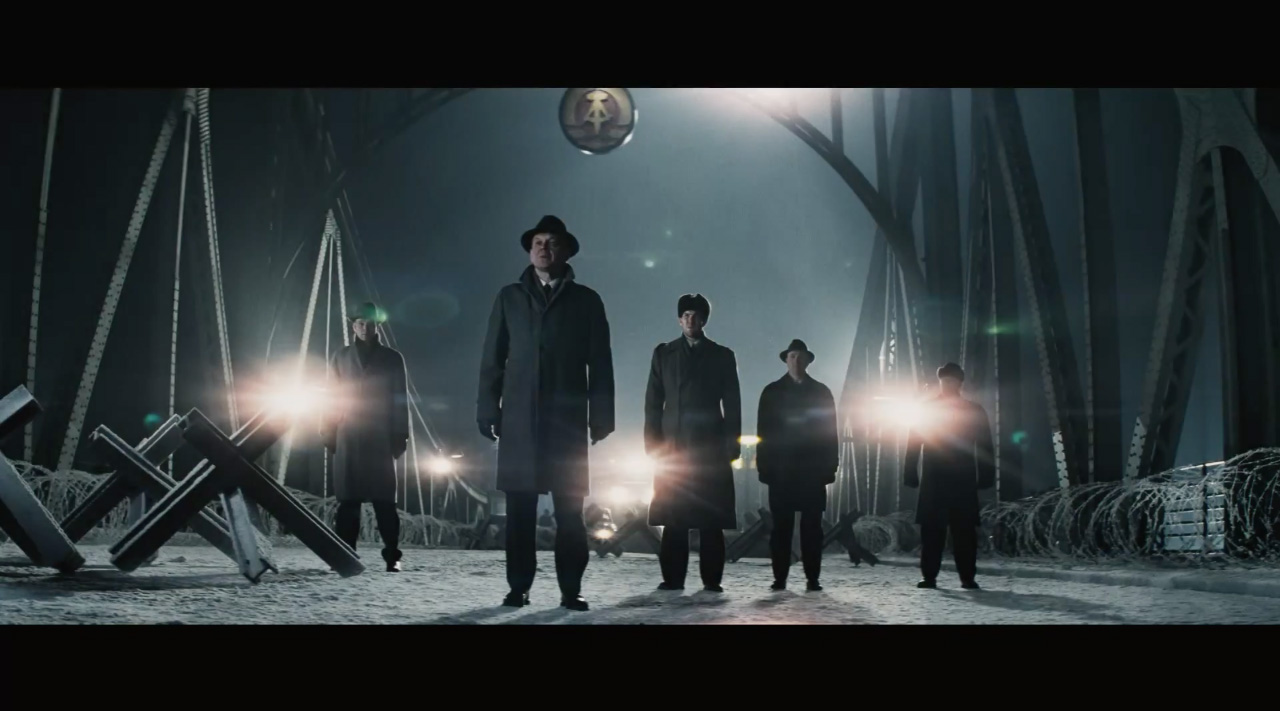
I saw Bridge of Spies today (I know, I'm a little late to the party) and it is every bit as good as everyone says it is. It didn't quite knock Spotlight out of the #1 spot on my 2015 favorites list, but it's pretty damn close. Spielberg definitely hasn't lost his touch, and I'd say he's at least got a solid shot at snagging a Best Director nomination from the Academy this winter. And why shouldn't he? Bridge of Spies is absolutely beautiful. Spielberg, it seems, is at his absolute best when he's doing a period piece. (Evidence: Schindler's List. If that film doesn't make you cry, I don't know what will.) And while we're handing out kudos, my compliments to the art department. Those sets and costumes were out of this world.
But all of that wasn't why I loved the film so much. Oh, that's part of it, I'll admit, but it's not the reason. There's a lot more going on under the surface of Bridge of Spies, and I truly hope people aren't too distracted by the historically-accurate production design to see it. (Although if they were I wouldn't blame them because seriously, look at those sets.)
Before I get into why Bridge of Spies really sent chills down my spine I'll have to get into a little personal backstory. I've had a lot of ups and downs with my faith over the past eighteen months or so, going from Christian to "I want nothing to do with the church" to "okay, sure, God exists, but wtf do I do with that information?" So it's not set in stone, exactly; I'm still figuring out where I stand, religion-wise, but I do believe in God and I do love Jesus and I do pray and sing and worship, so for all intents and purposes, let's say I'm a Christian. I was raised Episcopalian and still lean that way, but I have major issues with the representatives of my religion in general, which is kind of problematic to say the least.
So basically, to put it as simply as possible:
1. I believe in the Father, Son, and Holy Spirit
2. I believe in Heaven and angels
3. I believe God is watching us, He loves us, and He wants to save everyone (yes, even the atheists)
4. I believe that love conquers all and that God is love (even when He seems to be mad at us)
5. I believe that there is hope for the world even now when we can't seem to stop shooting each other
...do I sound like a Christian hippie? You know, the kind that makes Adam 4D throw up in his mouth? Yeah, probably. But you get the general point.
Now, there are a lot of religious/spiritual movies out there that claim to "spread the Word" by lacing as many sappy, otherwise-bland romantic comedies and family flicks with Bible references as possible. I've seen a few of these and honestly, they made me throw up a little. Christmas Angel. What If... God's Not Dead. The Christmas Lodge. War Room. All of them so absolutely stupid and insipid that I was either bored to tears or amused at how pathetic the evangelism attempts actually were. All of them so heavy-handed that were I an atheist, I would watch these things and go "ok, let's change the channel, this is stupid." I once got into a minor argument with someone who will not be named, over whether or not The Polar Express was "preachy." I wish I could sit him down in front of Christmas Angel or War Room--I got your "preachy" right here, buddy.
So no, I'm not a fan of "Christian" media. I'm also definitely not a "Christian" filmmaker. Not like that, anyway. I doubt anything I do will be distributed by Pure Flix. (In fact, I beg you, please beat me with a stick if I ever make anything that Pure Flix is interested in. I would literally rather be Tommy Wiseau than get to that point. Seriously.) No, when I find God in the movies, I find Him in less-blatant, less-evangelistic places.
Like, say, in Bridge of Spies.
The plot doesn't sound too spiritual, really, when you look at it on paper. A Soviet spy is caught, tried, and sentenced to prison in America, while a young American spy pilot is shot down and detained in Russia and an American student is captured in East Berlin. The no-nonsense lawyer who defended the Soviet spy is selected to arrange a prisoner exchange, he goes to Berlin to negotiate, and long story short, history is made. A nice little espionage thriller. A period piece--just what Spielberg does best--served with a nice, fresh side of Disneyfied patriotism, interspersed with a lot of talk about the Lord, the Constitution, and How Great America Really Is And Don't You Dare Say Otherwise.
But oh, it's so much more than that. Early on in the film Abel, the Russian spy, tells Donovan, his lawyer, how he once witnessed a man getting beaten by soldiers. The man kept getting back up, no matter how hard the men hit him, so they eventually gave up and let him go. This man served as a role model for Abel, who remains utterly calm even in the face of the death sentence. Whenever Donovan asks him if he is worried or afraid, Abel replies "Would it help?" He refuses to cooperate and pass information to the CIA, even if it would secure his freedom. He is calm and collected no matter what the situation. He is absolutely ready to die or be hurt for his country. "I'm not afraid to die," he tells Donovan when told about the possibility of the electric chair, "even if it's not my preference." Halfway into the first act I realized, shit, I kind of want to be like this guy and he's supposed to be "the enemy." Donovan repeatedly mentions throughout the film what a "good soldier" Abel has been and constantly expresses admiration for his conduct, despite the fact that he and Abel are on opposite sides of a very tense fight.
There is a popular worship song that literally everyone who has ever been to an evangelical protestant church has heard, called "Mighty to Save." In the second verse is the line, I give my life to follow everything I believe in/Now I surrender. I couldn't help but think about that line when I saw the way Abel reacts to his capture, and the way American spy Gary Powers reacts to his capture: both men are absolutely willing to give their lives for what they wholeheartedly believe in. They will surrender to the consequences, knowing they made the right call according to their own hearts and minds. Donovan worries that Abel's associates won't believe that he didn't give up any information to the Americans, and Abel assures him that even if they don't, it will be all right because Abel himself knows that he did not betray his country. That is a damn powerful message, considering our culture's obsession with heroism. In most movies if you do the right thing and aren't rewarded with a ticker-tape parade, it's seen as a tragedy. Here, it's acknowledged that even the right actions are not always noticed and rewarded--and that's okay.
In the Bible, Jesus tells us that our reward will be greater in Heaven if we don't loudly pray on street corners, if we don't make a show of doing the "right" thing or the "holy" thing, if we don't insist on showing everyone how religious we are. His message lines right up with the one presented to us in Bridge of Spies: if you do the right thing and you know it, it doesn't matter who else knows. You know. You are able to sleep at night, knowing you did what you needed to do. And that's all the reward you need.
I felt closer to God watching Bridge of Spies than I ever have watching a blatantly "Christian" movie. And when I look at some of the other movies I love, movies that I feel a spiritual connection to in some form or other, I think I see a pattern. The movies I fall in love with don't preach or force an agenda or insist that what they're showing you is the be-all end-all. They're just there, and let you draw what inspiration, comfort, or message you can from them.
One of my former Christian fellowship friends once saw a film I'd made in high school and commented, "I'd never know you were Christian from your work." Funny thing is, one of my fellow students had teased me about the same movie, saying "your virginity pledge is showing" because the romantic leads didn't have sex in the film. It's all in the way you look at things. Someone else is going to watch What If... and, with a sigh, say as the credits roll, "What a beautiful representation of Christ and His love, I wish everyone could see that movie!" Someone else is going to watch Bridge of Spies and think, "Blah, useless romanticized patriotism." Doesn't make any difference to me, or to Spielberg for that matter.
Because he knows what meaning he put into that film. And I know what meaning I took out of it.
And at the end of the day...you guessed it...that's what really matters.
But all of that wasn't why I loved the film so much. Oh, that's part of it, I'll admit, but it's not the reason. There's a lot more going on under the surface of Bridge of Spies, and I truly hope people aren't too distracted by the historically-accurate production design to see it. (Although if they were I wouldn't blame them because seriously, look at those sets.)


Before I get into why Bridge of Spies really sent chills down my spine I'll have to get into a little personal backstory. I've had a lot of ups and downs with my faith over the past eighteen months or so, going from Christian to "I want nothing to do with the church" to "okay, sure, God exists, but wtf do I do with that information?" So it's not set in stone, exactly; I'm still figuring out where I stand, religion-wise, but I do believe in God and I do love Jesus and I do pray and sing and worship, so for all intents and purposes, let's say I'm a Christian. I was raised Episcopalian and still lean that way, but I have major issues with the representatives of my religion in general, which is kind of problematic to say the least.
So basically, to put it as simply as possible:
1. I believe in the Father, Son, and Holy Spirit
2. I believe in Heaven and angels
3. I believe God is watching us, He loves us, and He wants to save everyone (yes, even the atheists)
4. I believe that love conquers all and that God is love (even when He seems to be mad at us)
5. I believe that there is hope for the world even now when we can't seem to stop shooting each other
...do I sound like a Christian hippie? You know, the kind that makes Adam 4D throw up in his mouth? Yeah, probably. But you get the general point.
Now, there are a lot of religious/spiritual movies out there that claim to "spread the Word" by lacing as many sappy, otherwise-bland romantic comedies and family flicks with Bible references as possible. I've seen a few of these and honestly, they made me throw up a little. Christmas Angel. What If... God's Not Dead. The Christmas Lodge. War Room. All of them so absolutely stupid and insipid that I was either bored to tears or amused at how pathetic the evangelism attempts actually were. All of them so heavy-handed that were I an atheist, I would watch these things and go "ok, let's change the channel, this is stupid." I once got into a minor argument with someone who will not be named, over whether or not The Polar Express was "preachy." I wish I could sit him down in front of Christmas Angel or War Room--I got your "preachy" right here, buddy.
So no, I'm not a fan of "Christian" media. I'm also definitely not a "Christian" filmmaker. Not like that, anyway. I doubt anything I do will be distributed by Pure Flix. (In fact, I beg you, please beat me with a stick if I ever make anything that Pure Flix is interested in. I would literally rather be Tommy Wiseau than get to that point. Seriously.) No, when I find God in the movies, I find Him in less-blatant, less-evangelistic places.
Like, say, in Bridge of Spies.
The plot doesn't sound too spiritual, really, when you look at it on paper. A Soviet spy is caught, tried, and sentenced to prison in America, while a young American spy pilot is shot down and detained in Russia and an American student is captured in East Berlin. The no-nonsense lawyer who defended the Soviet spy is selected to arrange a prisoner exchange, he goes to Berlin to negotiate, and long story short, history is made. A nice little espionage thriller. A period piece--just what Spielberg does best--served with a nice, fresh side of Disneyfied patriotism, interspersed with a lot of talk about the Lord, the Constitution, and How Great America Really Is And Don't You Dare Say Otherwise.
But oh, it's so much more than that. Early on in the film Abel, the Russian spy, tells Donovan, his lawyer, how he once witnessed a man getting beaten by soldiers. The man kept getting back up, no matter how hard the men hit him, so they eventually gave up and let him go. This man served as a role model for Abel, who remains utterly calm even in the face of the death sentence. Whenever Donovan asks him if he is worried or afraid, Abel replies "Would it help?" He refuses to cooperate and pass information to the CIA, even if it would secure his freedom. He is calm and collected no matter what the situation. He is absolutely ready to die or be hurt for his country. "I'm not afraid to die," he tells Donovan when told about the possibility of the electric chair, "even if it's not my preference." Halfway into the first act I realized, shit, I kind of want to be like this guy and he's supposed to be "the enemy." Donovan repeatedly mentions throughout the film what a "good soldier" Abel has been and constantly expresses admiration for his conduct, despite the fact that he and Abel are on opposite sides of a very tense fight.
There is a popular worship song that literally everyone who has ever been to an evangelical protestant church has heard, called "Mighty to Save." In the second verse is the line, I give my life to follow everything I believe in/Now I surrender. I couldn't help but think about that line when I saw the way Abel reacts to his capture, and the way American spy Gary Powers reacts to his capture: both men are absolutely willing to give their lives for what they wholeheartedly believe in. They will surrender to the consequences, knowing they made the right call according to their own hearts and minds. Donovan worries that Abel's associates won't believe that he didn't give up any information to the Americans, and Abel assures him that even if they don't, it will be all right because Abel himself knows that he did not betray his country. That is a damn powerful message, considering our culture's obsession with heroism. In most movies if you do the right thing and aren't rewarded with a ticker-tape parade, it's seen as a tragedy. Here, it's acknowledged that even the right actions are not always noticed and rewarded--and that's okay.
In the Bible, Jesus tells us that our reward will be greater in Heaven if we don't loudly pray on street corners, if we don't make a show of doing the "right" thing or the "holy" thing, if we don't insist on showing everyone how religious we are. His message lines right up with the one presented to us in Bridge of Spies: if you do the right thing and you know it, it doesn't matter who else knows. You know. You are able to sleep at night, knowing you did what you needed to do. And that's all the reward you need.
I felt closer to God watching Bridge of Spies than I ever have watching a blatantly "Christian" movie. And when I look at some of the other movies I love, movies that I feel a spiritual connection to in some form or other, I think I see a pattern. The movies I fall in love with don't preach or force an agenda or insist that what they're showing you is the be-all end-all. They're just there, and let you draw what inspiration, comfort, or message you can from them.
One of my former Christian fellowship friends once saw a film I'd made in high school and commented, "I'd never know you were Christian from your work." Funny thing is, one of my fellow students had teased me about the same movie, saying "your virginity pledge is showing" because the romantic leads didn't have sex in the film. It's all in the way you look at things. Someone else is going to watch What If... and, with a sigh, say as the credits roll, "What a beautiful representation of Christ and His love, I wish everyone could see that movie!" Someone else is going to watch Bridge of Spies and think, "Blah, useless romanticized patriotism." Doesn't make any difference to me, or to Spielberg for that matter.
Because he knows what meaning he put into that film. And I know what meaning I took out of it.
And at the end of the day...you guessed it...that's what really matters.
Saturday, December 5, 2015
The downward spiral of a broken media
I can't even count the number of times I've heard "Wow, you like a lot of violent movies, don't you?" Usually this is accompanied by a shocked face, or at least a raised eyebrow or two, or in a fair few cases a follow-up statement of "So why won't you watch Saw/Taken/Mad Max with me? Come on, it's not as bad as A Clockwork Orange." Okay, fair enough. Yes, I like a lot of not-so-G-rated media. Yes, A Clockwork Orange is one of my all-time favorite movies. Yes, I am absolutely in love with Marvel's Daredevil. Yes, I think that Gus Van Sant's Elephant is one of the most beautiful and haunting things I have ever seen. And don't even talk to me if you've seen Paranoid Park and didn't like it, because I'm not sure we can be friends. (Okay, that's an exaggeration, but seriously, go see it. It's a thing of beauty. Really.)
But here's the thing that all of those violent movies have in common: they all put an emphasis on the consequences of violence, not the mere act of violence. Think about it for a second. Think about how many films you've seen that treat violence as a given and brush off the consequences. Think about the films where superheroes take out entire cities and we're never told about collateral damage or civilian recovery. Think about war films where the hero takes out hundreds of enemies and we never even learn their names, it's just "the other guy" or "the bad guy." And then think about Daredevil. Not only is Wilson Fisk thoroughly humanized (we see montages of the guy waking up next to his girlfriend and making her a freaking omelet, for Pete's sake), but so are his victims--even the ones who are part of organized crime rings. Every time someone is killed on Daredevil, we see the fall-out. The death scenes may be violent and difficult to watch, but they serve a purpose. As a result, the message comes through loud and clear: your actions have consequences, even if and when you are acting for the greater good.
Now, here's the thing about Daredevil, and A Clockwork Orange, and all those other movies I just mentioned (Zero Dark Thirty, The Hurt Locker, Saving Private Ryan, Let the Right One In--I could go on and on). They are all R-rated, independent, or available only through specific providers. For example, Daredevil can only be seen if you have Netflix, you can't just come across it channel-surfing or scrolling through the free options on Hulu. You have to seek them out. They don't just fall into your lap--or at least, they usually don't. If you're a film student, or your dorm counselor is weirdly into Swedish horror, or your dad has very specific tastes in superhero TV, well, that's another story. But the point stands. It's very unlikely you'll wander across A Clockwork Orange in your post-work channel-surfing.
But you are likely to come across a lot of other things channel-surfing that are not R-rated, or obscure, or foreign, or Netflix-exclusive. Like Lord of the Rings, for instance. Or Harry Potter. Or Spider-Man. Or--and this is the worst of all--Fox News. CNN. MSNBC. Hell, Buzzfeed, Huffpost or the DailyDot. Pick a news outlet, any news outlet.
Let's tackle these one at a time, starting with movies that are widely considered to be kids'/teens' films. Lord of the Rings, for instance, where the Orcs are dismembered, stabbed, shot with arrows, hit with cannons--and that's just in one battle sequence--and entire armies are wiped out without so much as a "oh, shit." Let's talk about how the only deaths that are given any kind of due in those films are the ones where we know the characters' names. Otherwise, they're just there for the body count. Let's talk about all the supernatural battle scenes in Curse of the Black Pearl, or Harry Potter, or Chronicles of Narnia--that's the one that really grates my cheese, the Chronicles of Narnia: the Lion, the Witch, and the Wardrobe, because we NEVER ACTUALLY SEE ANY DEATH. The witch turns someone to stone and it's undone by Aslan, who's just come back from the dead himself, and then to top it all off Lucy is given a magical cordial that brings back anyone who's on the verge of dying. I get that it's a fairy tale, but come on! Oh, and can we talk about the freaking battle scene in Breaking Dawn--you know, the one that was revealed to be NOT EVEN REAL? See kiddies, violence has no consequence! It's not even real! This stuff never happens! War is just a game and if you get stabbed, you have a special energy drink that'll bring you back to life!
Am I being a tad unfair here? Perhaps I am, but you know what, I'm done. I'm sick of it. Enough is enough. In a world where there are more mass shootings than there have been days of the year, America's parents are, I shit you not, more concerned with nudity than they are with graphic violence. Let's just think about that for a second. People are actually, for serious, more afraid of their child seeing a naked body than graphic violence. Now, last I checked, was something that everyone had, and the mere act of being naked has never, in fact, hurt anyone; otherwise we'd be in serious trouble every time we took a shower...so what in the hell is that about?
Hey, MPAA, a little hint: if you normalize the shit out of violence by letting it creep into PG-13 and PG and even G-rated films, you cannot be surprised at the consequences.
"But Avery," you protest, "there's lots of evidence that violent movies aren't to blame!" Let me repeat, I do not exclusively blame violent movies. Did I not just say that A Clockwork Orange was my favorite movie? My problem is not that violent movies exist. My problem is that every film that I've ever seen where the consequences of violence are thoroughly portrayed and examined, has been slapped with an R-rating. Meanwhile films where killing someone has no consequence, or is justified because it's a "bad guy" (think Agent Cody Banks or, well, any Disney film really--but that one sticks out because in most cases, the hero-kid is not directly responsible for the death of the antagonist) get a free pass because it's usually bloodless. Now, isn't that just a little messed up, you think? Doing things that way literally removes the consequences of violence. In real life, when people get shot or beaten, there's blood. They die. In the movies...well, who cares?
And here's the issue I have with that. When I was a kid, I was convinced--and I do mean convinced, no one short of Jesus Christ himself could have persuaded me to believe otherwise--that Eeyore was stalking me from the hall closet. Back in the day, you see, there was a show called Pooh Corner and it featured Disney World-like full costumed characters instead of traditional animation. So in my mind Eeyore was real, he was in the closet, and he would not leave me alone. Why? Who knows. All that matters is that my parents had a lot of sleepless nights convincing me that there was not a depressed donkey hiding in our linen closet.
My point is that little kids cannot separate fantasy and reality. They're well known for it. For some kids it's a monster under the bed; for others it's Eeyore in the hall closet. Think about the effect that gratuitous violence has on kids who don't know whether it's real or not. That's exactly why my parents had the media policy they did when I was growing up: let her hear curse words, let her see a naked body, but anything more violent than a one-hit fistfight, we're going to have to talk about. Kids don't understand death. We really don't. I remember not understanding that when someone in a movie dies, the actor is still alive. A lot of kids I knew had the opposite problem and didn't get that when someone in real life dies, it's for good.
So there's one-half the problem, right there. And then we come to the other half: the news media. And by news media, in this day and age I don't just mean the New York Times, or Fox News. I mean TV, newspapers, magazines (ANY magazine, Time or Tiger Beat), online magazines and news sites like the Huffington Post, NPR, AM/FM radio, and--perhaps the biggest offenders--social media sites. Facebook, Twitter, Tumblr, Buzzfeed, any of them. Now, I stand by the idea that news media is actually a worse offender in the violence department than film violence. Film violence is staged, and most rational adults realize that. But when you splash footage of violent killings over the news and talk about it at length, replay the clip in slow-motion, hire experts to analyze it while you replay it in slow-motion, reenact it with live actors or computer imagery...well, you get my point. It's real. That is a real person dying in that video clip. And now it's out there for everyone to see.
And what kind of message does that send to disturbed kids with access to weapons? It was bad enough back in the 1990s, when Columbine happened and round-the-clock coverage was on every news station of every TV in America. Now, shit's gone viral. Back then we relied on security footage. Now, you can whip out your cell phone as a gunman blasts into your school and film your last moments--there's a morbid thought, am I right? But it's true. In this day and age, I can google "ISIS beheadings" and find a video in the time it took you to read this sentence. We immortalize killers with TV, radio, and worst of all the internet. And then we're surprised when another psychopath with a gun and an axe to grind makes his attempt to go down in history...and every time, we give them exactly what they want. Roger Ebert said this a hell of a lot better back in 2003, and today it still rings true--maybe even more so than it did back then, because as I said, back in '03, we didn't have the viral video culture we do now.
But it gets even better, because that news media that I talked about, the one that will sensationalize killers with theme songs, catchy names and 24/7 motive analysis? They're excellent at putting the blame back on fictional media. The fictional media then turns right back around and satirizes the news media (see Gone Girl for a truly excellent example of this), the news media fights back by censoring and vilifying the fictional media, and the circle continues. Neither will accept their share of the blame, and neither will cease in throwing stones at each other. It's like watching a never-ending game of air hockey that nobody can ever win.
Now, I don't know what to do about gun culture. I don't know how to fight the NRA. Taking away all guns isn't the solution...we all saw how well that worked with alcohol in the 1930s...but the other extreme clearly hasn't done us much good either. Whatever your view on guns might be, I'm asking you to at least agree with me on this: letting kids think that violence has no consequence is a bad idea. Because, Jesus Christ, look what happens when those kids grow up. With that said, I don't know how to strike the right balance between freedom granted by the Second Amendment, the right to protect yourself, and the danger that guns present. Nor do I know the best way to talk to the next generation about this exact problem.
Here's what I do know and what I will do. I will continue to speak out against sensationalizing killers, thieves and terrorists in the news media. I will never, ever say or post the names of the Sandy Hook killer, the Columbine killers, the Planned Parenthood shooter, the Aurora Dark Knight killer...none of them. I will not be part of their immortality. I will continue to fight the glorification of violence and demonization of sex that we've seen in our culture. And I will ask, again and again, that my fellow filmmakers--students, amateurs, professionals and celebrities alike--do the same.
Let's tackle these one at a time, starting with movies that are widely considered to be kids'/teens' films. Lord of the Rings, for instance, where the Orcs are dismembered, stabbed, shot with arrows, hit with cannons--and that's just in one battle sequence--and entire armies are wiped out without so much as a "oh, shit." Let's talk about how the only deaths that are given any kind of due in those films are the ones where we know the characters' names. Otherwise, they're just there for the body count. Let's talk about all the supernatural battle scenes in Curse of the Black Pearl, or Harry Potter, or Chronicles of Narnia--that's the one that really grates my cheese, the Chronicles of Narnia: the Lion, the Witch, and the Wardrobe, because we NEVER ACTUALLY SEE ANY DEATH. The witch turns someone to stone and it's undone by Aslan, who's just come back from the dead himself, and then to top it all off Lucy is given a magical cordial that brings back anyone who's on the verge of dying. I get that it's a fairy tale, but come on! Oh, and can we talk about the freaking battle scene in Breaking Dawn--you know, the one that was revealed to be NOT EVEN REAL? See kiddies, violence has no consequence! It's not even real! This stuff never happens! War is just a game and if you get stabbed, you have a special energy drink that'll bring you back to life!
Am I being a tad unfair here? Perhaps I am, but you know what, I'm done. I'm sick of it. Enough is enough. In a world where there are more mass shootings than there have been days of the year, America's parents are, I shit you not, more concerned with nudity than they are with graphic violence. Let's just think about that for a second. People are actually, for serious, more afraid of their child seeing a naked body than graphic violence. Now, last I checked, was something that everyone had, and the mere act of being naked has never, in fact, hurt anyone; otherwise we'd be in serious trouble every time we took a shower...so what in the hell is that about?
Hey, MPAA, a little hint: if you normalize the shit out of violence by letting it creep into PG-13 and PG and even G-rated films, you cannot be surprised at the consequences.
"But Avery," you protest, "there's lots of evidence that violent movies aren't to blame!" Let me repeat, I do not exclusively blame violent movies. Did I not just say that A Clockwork Orange was my favorite movie? My problem is not that violent movies exist. My problem is that every film that I've ever seen where the consequences of violence are thoroughly portrayed and examined, has been slapped with an R-rating. Meanwhile films where killing someone has no consequence, or is justified because it's a "bad guy" (think Agent Cody Banks or, well, any Disney film really--but that one sticks out because in most cases, the hero-kid is not directly responsible for the death of the antagonist) get a free pass because it's usually bloodless. Now, isn't that just a little messed up, you think? Doing things that way literally removes the consequences of violence. In real life, when people get shot or beaten, there's blood. They die. In the movies...well, who cares?
And here's the issue I have with that. When I was a kid, I was convinced--and I do mean convinced, no one short of Jesus Christ himself could have persuaded me to believe otherwise--that Eeyore was stalking me from the hall closet. Back in the day, you see, there was a show called Pooh Corner and it featured Disney World-like full costumed characters instead of traditional animation. So in my mind Eeyore was real, he was in the closet, and he would not leave me alone. Why? Who knows. All that matters is that my parents had a lot of sleepless nights convincing me that there was not a depressed donkey hiding in our linen closet.
My point is that little kids cannot separate fantasy and reality. They're well known for it. For some kids it's a monster under the bed; for others it's Eeyore in the hall closet. Think about the effect that gratuitous violence has on kids who don't know whether it's real or not. That's exactly why my parents had the media policy they did when I was growing up: let her hear curse words, let her see a naked body, but anything more violent than a one-hit fistfight, we're going to have to talk about. Kids don't understand death. We really don't. I remember not understanding that when someone in a movie dies, the actor is still alive. A lot of kids I knew had the opposite problem and didn't get that when someone in real life dies, it's for good.
So there's one-half the problem, right there. And then we come to the other half: the news media. And by news media, in this day and age I don't just mean the New York Times, or Fox News. I mean TV, newspapers, magazines (ANY magazine, Time or Tiger Beat), online magazines and news sites like the Huffington Post, NPR, AM/FM radio, and--perhaps the biggest offenders--social media sites. Facebook, Twitter, Tumblr, Buzzfeed, any of them. Now, I stand by the idea that news media is actually a worse offender in the violence department than film violence. Film violence is staged, and most rational adults realize that. But when you splash footage of violent killings over the news and talk about it at length, replay the clip in slow-motion, hire experts to analyze it while you replay it in slow-motion, reenact it with live actors or computer imagery...well, you get my point. It's real. That is a real person dying in that video clip. And now it's out there for everyone to see.
And what kind of message does that send to disturbed kids with access to weapons? It was bad enough back in the 1990s, when Columbine happened and round-the-clock coverage was on every news station of every TV in America. Now, shit's gone viral. Back then we relied on security footage. Now, you can whip out your cell phone as a gunman blasts into your school and film your last moments--there's a morbid thought, am I right? But it's true. In this day and age, I can google "ISIS beheadings" and find a video in the time it took you to read this sentence. We immortalize killers with TV, radio, and worst of all the internet. And then we're surprised when another psychopath with a gun and an axe to grind makes his attempt to go down in history...and every time, we give them exactly what they want. Roger Ebert said this a hell of a lot better back in 2003, and today it still rings true--maybe even more so than it did back then, because as I said, back in '03, we didn't have the viral video culture we do now.
But it gets even better, because that news media that I talked about, the one that will sensationalize killers with theme songs, catchy names and 24/7 motive analysis? They're excellent at putting the blame back on fictional media. The fictional media then turns right back around and satirizes the news media (see Gone Girl for a truly excellent example of this), the news media fights back by censoring and vilifying the fictional media, and the circle continues. Neither will accept their share of the blame, and neither will cease in throwing stones at each other. It's like watching a never-ending game of air hockey that nobody can ever win.
Now, I don't know what to do about gun culture. I don't know how to fight the NRA. Taking away all guns isn't the solution...we all saw how well that worked with alcohol in the 1930s...but the other extreme clearly hasn't done us much good either. Whatever your view on guns might be, I'm asking you to at least agree with me on this: letting kids think that violence has no consequence is a bad idea. Because, Jesus Christ, look what happens when those kids grow up. With that said, I don't know how to strike the right balance between freedom granted by the Second Amendment, the right to protect yourself, and the danger that guns present. Nor do I know the best way to talk to the next generation about this exact problem.
Here's what I do know and what I will do. I will continue to speak out against sensationalizing killers, thieves and terrorists in the news media. I will never, ever say or post the names of the Sandy Hook killer, the Columbine killers, the Planned Parenthood shooter, the Aurora Dark Knight killer...none of them. I will not be part of their immortality. I will continue to fight the glorification of violence and demonization of sex that we've seen in our culture. And I will ask, again and again, that my fellow filmmakers--students, amateurs, professionals and celebrities alike--do the same.
Subscribe to:
Posts (Atom)